Google Patents
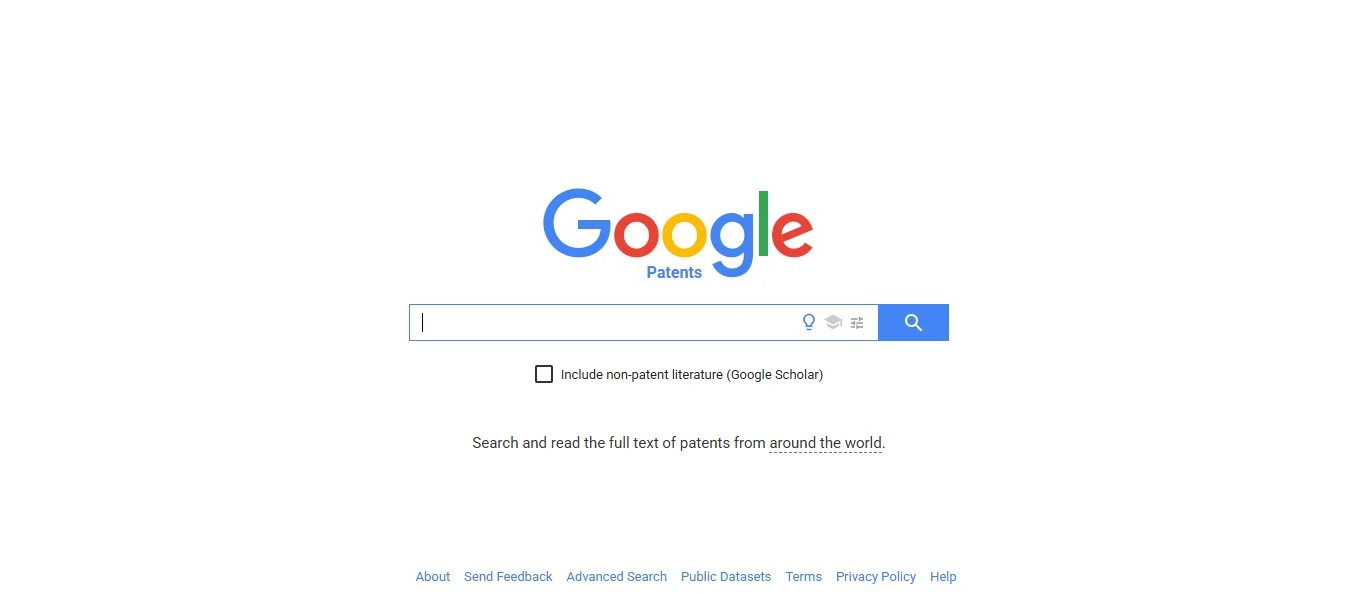
Search and read the full text of patents


-
Stop Dreaming. Start Executing.
Join the Ferct Founding 50 to unlock your full potential and achieve your dreams.
Exclusive Lifetime Access to Ferct – The World's First Goal Achievement Network.
SECURE YOUR SPOT NOW
-
Become a Certified Scientific Researcher
Join the world’s #1 comprehensive online skills program designed to empower college students, postgraduates, and researchers to launch or advance their careers in research and development.
Learn more
This offer for one time after that will be this closed forever. No extensions. No second chancess.
Description:
Google Patents is a free, comprehensive search engine designed to help users discover patent and intellectual property (IP) information. It provides access to millions of patents and patent applications from around the world, including those from the United States Patent and Trademark Office (USPTO), the European Patent Office (EPO), and other international IP organizations. By leveraging Google’s advanced search technologies, Google Patents simplifies the process of finding, analyzing, and understanding patents.
Main Features and Functions:
- Global Patent Database:
- Access patents and applications from multiple countries and jurisdictions, including the USPTO, EPO, WIPO, and others.
- Includes non-patent literature, such as scientific papers, for enhanced context.
- Advanced Search Capabilities:
- Allows users to search by keywords, inventor, assignee, classification codes, or publication numbers.
- Supports Boolean operators for precise queries.
- Patent Details and Analytics:
- View detailed patent documents, including claims, descriptions, drawings, and citations.
- Provides patent family information to explore related filings across jurisdictions.
- Integrated Prior Art Finder:
- Automatically suggests related patents, articles, and documents to assess prior art and novelty.
- Filters and Sorting Options:
- Narrow results by filing date, status (granted or pending), jurisdiction, or assignee.
- Sort results by relevance or date.
- Machine Translation:
- Offers translations of patents filed in non-English languages, enabling access to global IP data.
- Visualization Tools:
- Displays citation graphs to track the influence and references of a patent.
- Highlights key terms and relationships within the patent text.
- Patent Download Options:
- Download patents as PDF files for offline review and analysis.
- Open and Free Access:
- Google Patents is entirely free to use, with no subscription or account requirements.
Guide:
How to Use Google Patents
- Accessing Google Patents:
- Visit Google Patents using a web browser.
- Performing a Search:
- Enter keywords, inventors, or assignees in the search bar.
- Use advanced search options or Boolean operators for more specific queries.
- Exploring Search Results:
- Click on a patent to view its details, including abstract, claims, description, and legal status.
- Review related documents and non-patent literature provided in the "Prior Art Finder" section.
- Using Filters:
- Apply filters to refine results by jurisdiction, filing date, inventor, or assignee.
- Sort results by relevance or filing date for easier navigation.
- Viewing Citations and Related Documents:
- Explore backward and forward citations to understand the patent’s influence and prior art.
- Use citation graphs to visualize the relationship between patents.
- Downloading Patents:
- Click the "Download PDF" option to save the full-text patent for offline use.
- Using Machine Translations:
- For non-English patents, toggle the "Translate" feature to view the text in your preferred language.
- Exploring Patent Families:
- Review the “Patent Family” section to find related applications filed in different jurisdictions.
- Analyzing Prior Art:
- Use the integrated Prior Art Finder to assess existing literature and patents relevant to your search.
Google Patents is an indispensable tool for inventors, researchers, and businesses seeking to explore patents, evaluate IP landscapes, or understand innovation trends globally. Its intuitive interface, comprehensive database, and advanced search capabilities make it a valuable resource for patent research.
Main Information
Related tools