BASE
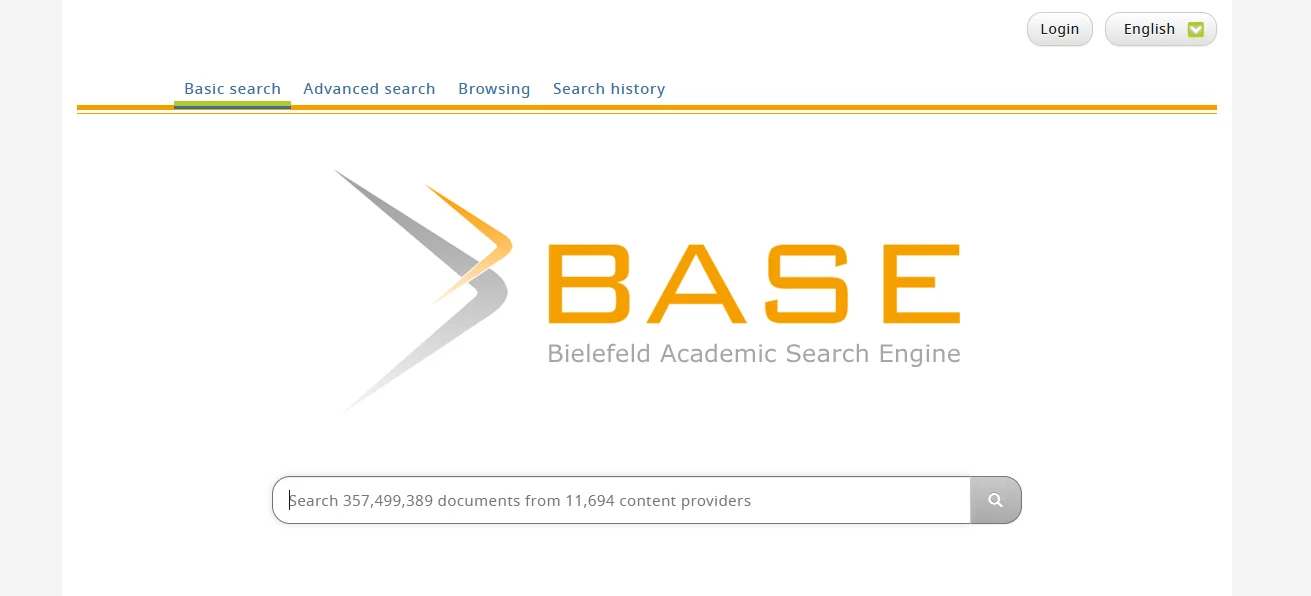
BASE (Bielefeld Academic Search Engine)


-
Stop Dreaming. Start Executing.
Join the Ferct Founding 50 to unlock your full potential and achieve your dreams.
Exclusive Lifetime Access to Ferct – The World's First Goal Achievement Network.
SECURE YOUR SPOT NOW
-
Become a Certified Scientific Researcher
Join the world’s #1 comprehensive online skills program designed to empower college students, postgraduates, and researchers to launch or advance their careers in research and development.
Learn more
This offer for one time after that will be this closed forever. No extensions. No second chancess.
Description:
BASE (Bielefeld Academic Search Engine) is one of the largest and most powerful search engines for academic resources. Developed by the Bielefeld University Library in Germany, it provides access to over 300 million documents from more than 10,000 content providers, including repositories, journals, and academic databases. BASE specializes in indexing Open Access materials, making it an invaluable tool for researchers, students, and academics seeking free and reliable scholarly content.
Main Features and Functions:
- Extensive Academic Database:
BASE indexes a wide range of scholarly content, including journal articles, theses, reports, conference papers, and more. - Open Access Emphasis:
A significant portion of the documents indexed by BASE are freely accessible, promoting open academic sharing. - Advanced Search Capabilities:
Users can perform detailed searches with filters like document type, language, year, and content provider. - Multilingual Interface:
BASE supports multiple languages, making it accessible to a global academic audience. - Data Provider Transparency:
BASE highlights the source of each document, enabling users to verify the origin and credibility of materials. - Structured Metadata:
Metadata is consistently structured, allowing for more precise searches and integration with bibliographic tools. - Integration with External Tools:
BASE supports citation exports to tools like Zotero and EndNote, facilitating academic writing and referencing. - Customizable Results Display:
Users can sort results by relevance, date, author, title, or content provider for easier navigation. - API for Developers:
BASE provides an API for developers and institutions, enabling integration into digital library systems or custom applications.
Guide:
How to Use BASE
- Accessing BASE:
Visit BASE using a web browser. - Performing a Search:
- Enter keywords, author names, or publication titles in the search bar.
- Use Boolean operators (AND, OR, NOT) and quotation marks for more specific searches.
- Press Enter to display the search results.
- Refining Results:
- Use the filters on the left-hand side to refine results by year, language, document type, or access level (e.g., Open Access).
- Advanced search options allow for more granular filtering, such as by publication source or subject area.
- Accessing Documents:
- Click on the title of a result to view more details about the document.
- Follow the provided links to access the full text, if available.
- Open Access materials can often be downloaded directly from the repository or publisher's site.
- Using Metadata:
- Click on "Export citation" to save metadata in formats compatible with citation managers like BibTeX, RIS, or EndNote.
- Creating Alerts and Saving Searches:
While BASE does not have built-in alerts, users can bookmark advanced search queries for repeated use. - Leveraging the API:
- Institutions or developers can integrate BASE's search functionalities into their systems using the API, which provides customizable access to its vast database.
BASE is an excellent tool for locating high-quality academic content, particularly Open Access materials. Its user-friendly interface and robust features make it a valuable resource for research and scholarly exploration.
Main Information
Related tools